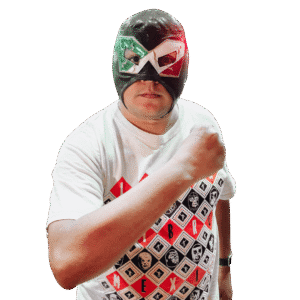
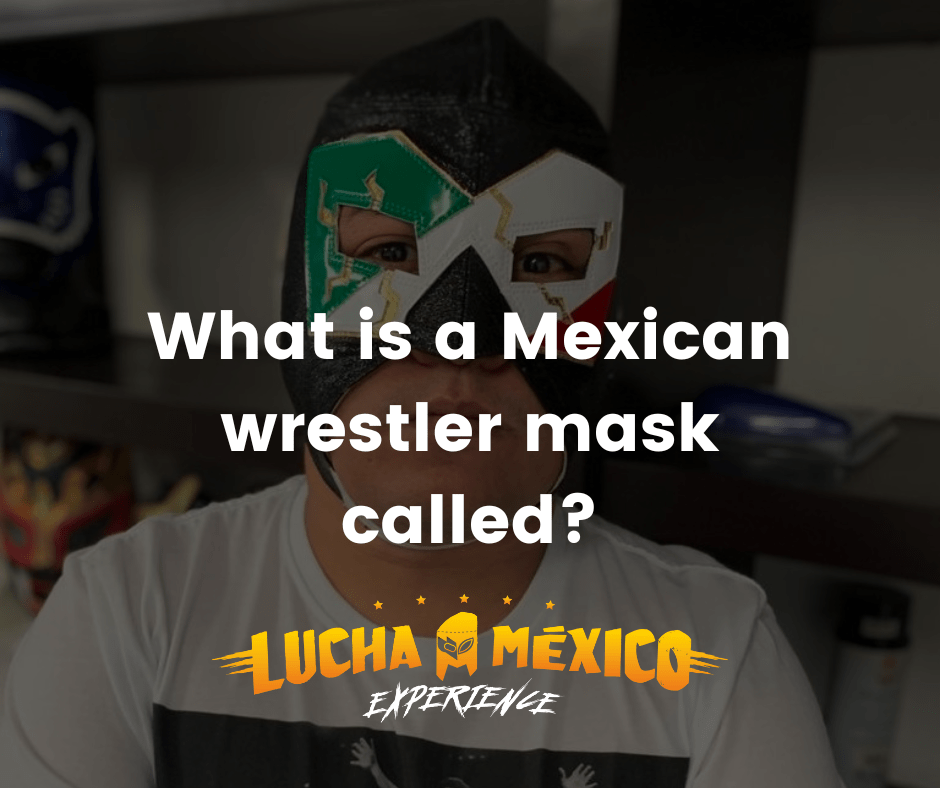
In lucha libre the mask is called a máscara. Fans also call it a tapa, a bit of slang you’ll hear in the stands, but máscara is by far the most common word.
More than a costume
For a masked luchador, the máscara is the identity. Many wrestlers spend their whole career without showing their face in public, and fans know them only by the mask and the name that goes with it. Losing the mask is the biggest blow of a career.
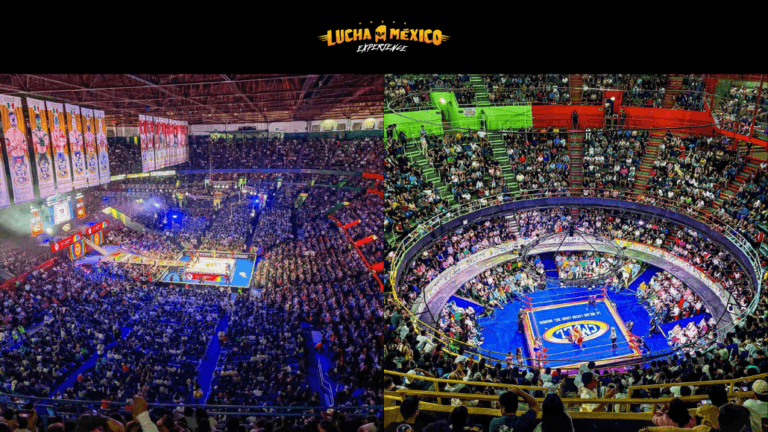
That’s why the most important match in lucha libre is the apuesta, the bet: máscara contra máscara, mask against mask, where the loser unmasks in the ring and reveals his real name. Those nights fill Arena México and are remembered for decades.
Who makes them
Professional masks are made by hand by mascareros, artisans who design and sew each one, often for a single luchador. A professional mask usually carries the mascarero’s signature or the wrestler’s emblem. What they’re made of, and how to tell a professional mask from a souvenir, is in what lucha libre masks are made of.
The mask you take home
On our nights every guest gets a real lucha libre mask, souvenir level, with the design of a CMLL luchador, some active and some retired. You can put it on in the stands and watch the show the way a lifelong fan does.
Frequently asked questions
What does tapa mean? It’s fan slang for the mask. It literally means cover or lid.
Can I wear a mask to the arena? Yes, and many fans do.
Where does the mask tradition come from? Masks have deep roots in Mexican culture; we explore the connection in what Aztecs and Mayans have to do with lucha libre.